
Success Is Born Of Many Failures
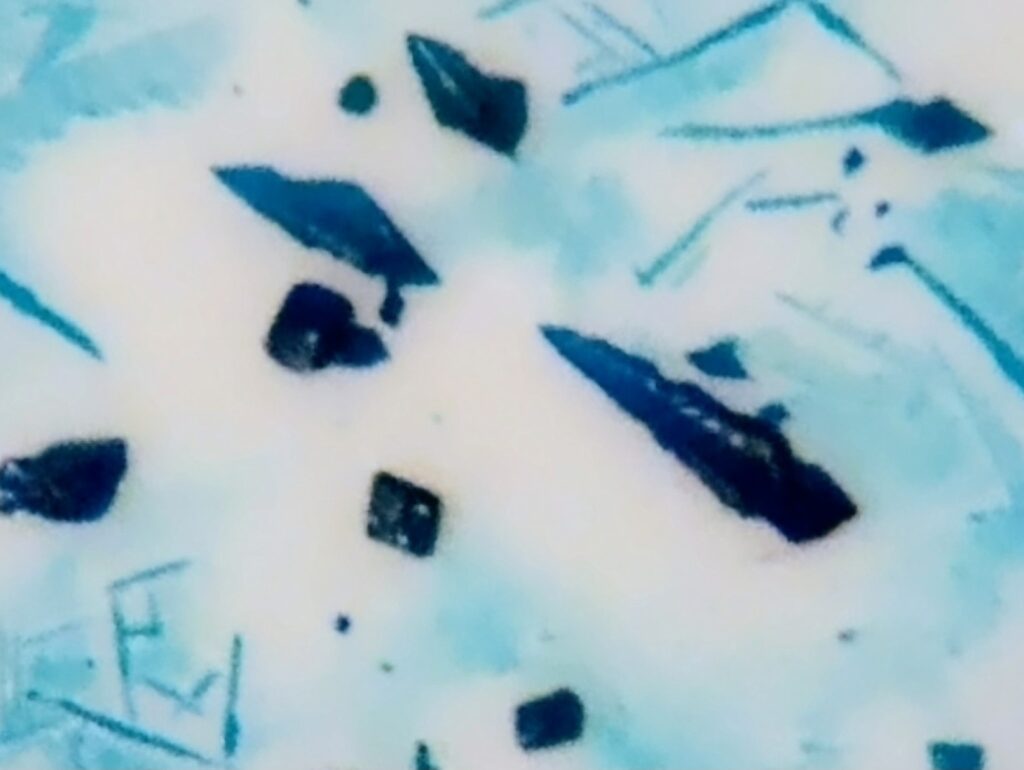
Ok so, about a year ago, I made a small amount of copper acetate, I was planning to use it for electroplating. I didn’t finish this experiment, but I did learn a couple things, so now, I’m trying to grow a copper acetate crystal from the solution I made back then, as it is now a concentrate.
I just now learned that the fumes from that same solution turns copper green as I was attempting to see if i could create a nucleation point on a bit of bare copper. Interesting night!
Below, you will find a short list of polyhedra – three of which you can make at home with household chemicals and patience. Please proceed with caution.
| Shape | Candidate Materials | Method / Conditions | Home Feasible? |
|---|---|---|---|
| Dodecahedron | Pyrite (FeS₂), Garnets | Mineral growth, flux growth, high temperature | No |
| Icosahedron | Quasicrystals (Al–Mn, Al–Cu–Fe) | Metallic alloy, melt & controlled cooling | No |
| Octahedron | Copper sulfate, Alum | Saturated solution, slow crystallization | Yes |
| Cube | NaCl, KCl | Saturated solution, slow evaporation | Yes |
| Tetragonal | Borax | Saturated solution, slow cooling | Yes |
This below is the solution I am using, this reaction is pretty much non toxic, but can stain things blue (which might also be an interesting use in a controlled environment) but try not to get it on your skin unless you really love the Smurfs.
Copper(II) Acetate Preparation Using Hydrogen Peroxide
Reaction overview:
- Hydrogen peroxide oxidizes copper metal → copper(II)
- Acetic acid (vinegar) supplies acetate ions
- They combine → copper(II) acetate in solution
So instead of waiting days for air oxidation, peroxide does it quickly.
Safety Note
Safe, controlled method. Use 3% pharmacy hydrogen peroxide only.
Working Ratio
- White vinegar
- Add ~10–20% volume of 3% hydrogen peroxide
- Add clean copper pieces
Example
- 100 mL vinegar
- 10–20 mL 3% hydrogen peroxide
- Drop in copper
You should see bubbling and blue color forming.
Important Controls
Do not:
- Use high-strength peroxide
- Heat the peroxide mixture
- Seal the container tightly (oxygen is released)
- Add ammonia
Keep the container vented.
What to Expect
- Solution turns blue-green
- Reaction slows as peroxide is consumed
- Excess peroxide decomposes to water + oxygen
- Once bubbling stops, let it sit exposed to air to deepen color
Important for Crystal Growth
After the reaction finishes:
- Let the solution sit open for a day
- This allows:
- Remaining peroxide to decompose
- Oxygen to equilibrate
- Reaction to stabilize
Residual peroxide can interfere with crystal growth if you start evaporating immediately.
One Subtle Tip
Clean copper first:
- Sand lightly
- Rinse
- Quick vinegar rinse
- Rinse again
Oxides and oils slow the reaction and introduce impurities.
Why This Method is Ideal
It produces:
- Clean copper acetate
- Minimal side products
- Predictable concentration
- Fast turnaround for repeated seed cycles
- Perfect for experimental crystal growth like you’re doing